

Durable Steel Structures for Industrial & Commercial Projects
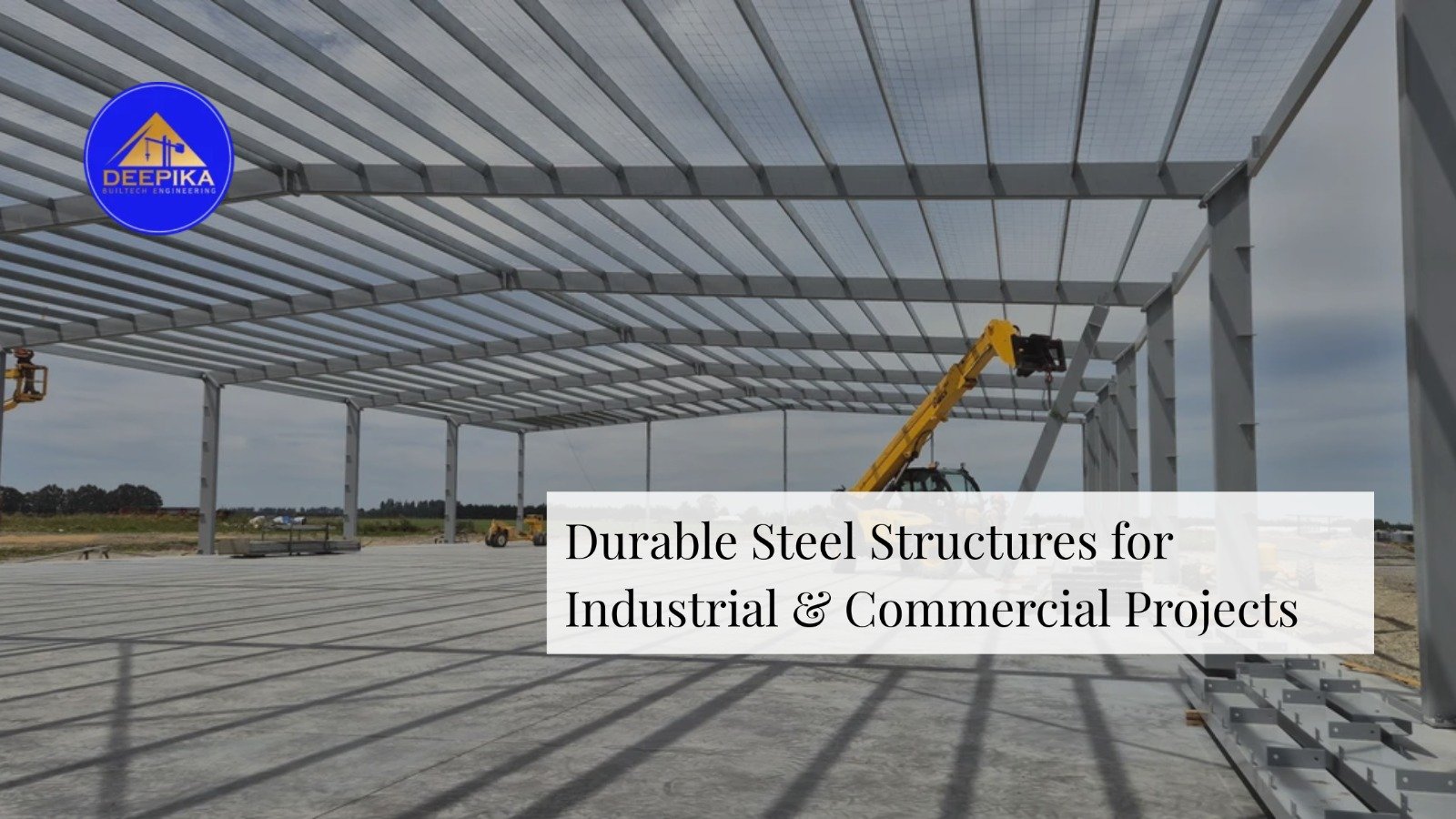
Whether it is industrial or commercial construction, steel structures have become the most preferred choice for business entities desirous of durability, efficiency, and long-term performance. From warehouses, manufacturing units, and logistic hubs to showrooms and multi-storey commercial complexes, steel construction offers the right combination of unmatched strength and design flexibility. The development and modernization of industries have generated demands for quicker completion of projects with minimum maintenance costs. It has thus emerged that steel forms the backbone of modern infrastructure development.
An organization can ill afford to experience downtime or structural failure in today’s competitive environment. Therefore, durable steel structure have become quite imperative with regard to safety, stability, and efficiency of operations. By improving engineering, prefabrication, and fabrication technologies, construction with steel buildings is now quicker and much more accurate than has ever been possible before.
Why Steel Structures Are Ideal for Industrial & Commercial Projects
1.Unmatched Strength & Durability
It is known for its high tensile strength, which enables it to resist high loads, severe weather, and seismic forces. Heavy machinery, vibration, and dynamic loads are the common industrial environment conditions, and under such conditions, the performance of the Steel Structures is far superior as compared to conventional RCC buildings.
2.Faster Construction & Lower Project Time
The prefabricated steel is manufactured and brought in from outside for quick assembly on site, reducing construction time by up to 50%. Other major advantages of having a fast-moving workflow include the time it gives commercial businesses to start their operations.
3.Cost-effective in the Long Run
Although the initial cost is somewhat higher in comparison with conventional construction, steel buildings do bring in long-term savings due to:
- Lower maintenance needs
- Longer life expectancy
- Reduced repair costs
- Fewer structural reinforcements
This makes structures of steel a smart investment for industrial entrepreneurs and owners of commercial properties.
4.Highly Customizable Designs
One of the main advantages of steel is its flexibility: be it column-free areas, large door openings, mezzanine floors, or bespoke layouts, it opens up new design possibilities for the architect. Manufacturing industries, the automobile industry, and even warehousing need open-layout designs, which steel provides with ease.
5.Eco-friendly & sustainable
Using steel is an ecologically friendly choice because it is 100% recyclable. As sustainability grows, one of the prime construction priorities; businesses like using steel because there’s minimal waste, reusable materials, and energy-efficient design.
Applications of Steel Structure in Modern Infrastructure
Applications of steel also include virtually all industrial and commercial establishments, such as:
- Warehouses & cold storage units
- manufacturing factories
- Logistics & distribution centers
- Commercial buildings & office complexes
- Automobile showrooms
- Workshops & service centers
- Retail outlets & shopping complexes
- aircraft hangars
- Agricultural storage structures
Versatility and adaptability make Steel Structures suitable for almost any kind of construction requirement.
Key Features of High-Quality Steel Structures
1.Higher Load-Carrying Ability
The design of the steel frame is such that it can resist the action of static and dynamic loads; hence, it is most suitable for industrial applications where heavy machinery and other equipment run uninterruptedly.
2.Corrosion-Resistant Finishes
Unlike the early versions, modern Steel Metal Building is galvanized, painted, and coated with technologies that can make it resistant to rust and weathering for many years.
3.Fire Safety & Structural Integrity
Fire-resistant materials and coatings can be used in designing steel buildings to achieve higher standards of safety, coupled with improved industrial compliance.
4.Low Maintenance Requirements
While concrete buildings often develop cracks or need some sort of repair, steel buildings can be sturdy for many years with less maintenance.
How Steel Structure Improve Business Efficiency
- Smoother Operational Flow Open spaces, wide spans, and custom layouts give the entrepreneur the ability to optimize workflow, machinery placement, and storage.
- Options for Quick Expansion Many of today’s industries have to be able to expand over a period of time. Expansion with steel buildings couldn’t be easier, thanks to modular systems permitting extra bays, extensions, and rooftop units.
- Less Downtime Because steel buildings are more resilient, there is less risk of any structural issues that can affect the halting of operations.
- Better ROI From reduced maintenance to long-term durability, Steel Structure offer excellent returns for investors in industries and commerce.
Conclusion
At Deepika, Durable Steel Structures have revolutionized industrial and commercial building processes through efficiency, versatility, and durability for years on end. Be it a factory, warehouse, showroom, or office, steel offers a future-ready solution that saves time, reduces costs, and maintains unmatched structural integrity. With the growing demand for more speed, precision, and sustainability, steel continues to be the preferred choice for modern infrastructure development.
Q&A
1. What makes Steel Structures better than traditional concrete buildings?
Steel Structures are stronger, faster to install, offer greater design flexibility, and require far less maintenance compared to concrete buildings.
2. Are Steel Structures suitable for heavy industrial use?
Yes. Steel’s high tensile strength and durability make it ideal for factories, warehouses, and heavy industrial applications.
3. How long do Steel Structures last?
With proper coatings and maintenance, Steel Structures can last 40–70 years or more.
4. Can Steel Structures be expanded in the future?
Absolutely. Steel buildings are modular and can be expanded easily without major reconstruction.
5. Are Steel Structures eco-friendly?
Yes. Steel is 100% recyclable and generates minimal construction waste, making it a sustainable option.
6. Is steel construction cost-effective?
While initial costs may vary, steel reduces long-term expenses due to its durability, low maintenance, and faster construction timeline.
