

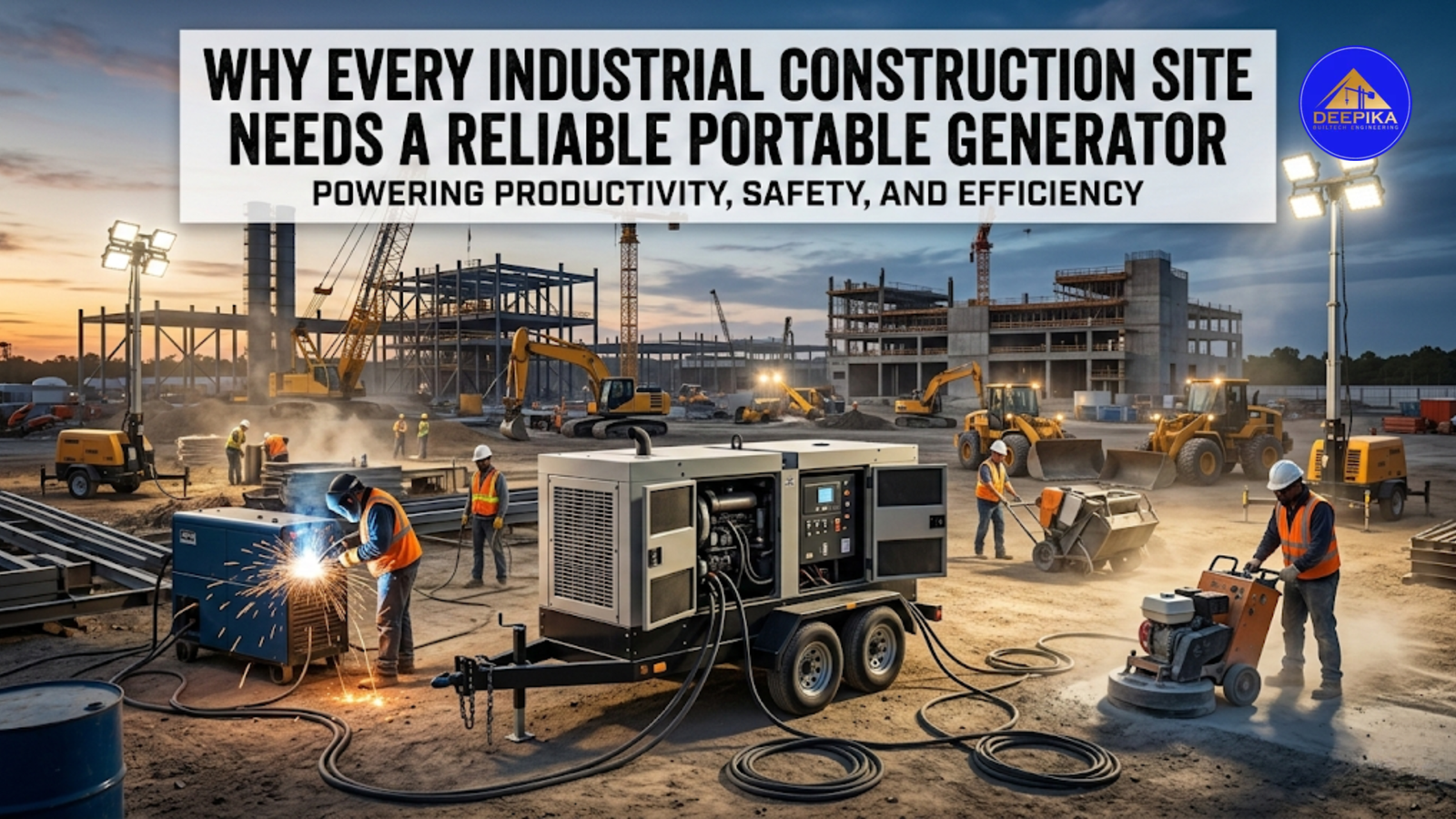
Why Every Industrial Construction Site Needs a Reliable Portable Generator
Table of Contents
Industrial construction projects operate in demanding environments where delays, downtime, and power interruptions can quickly turn into costly setbacks. From large-scale civil works to MEP installations and structural fabrication, uninterrupted power is not a convenience, it is a necessity. A reliable construction site generator rented by the best generator company ensures that construction activities continue smoothly, safely, and on schedule, regardless of external power conditions.
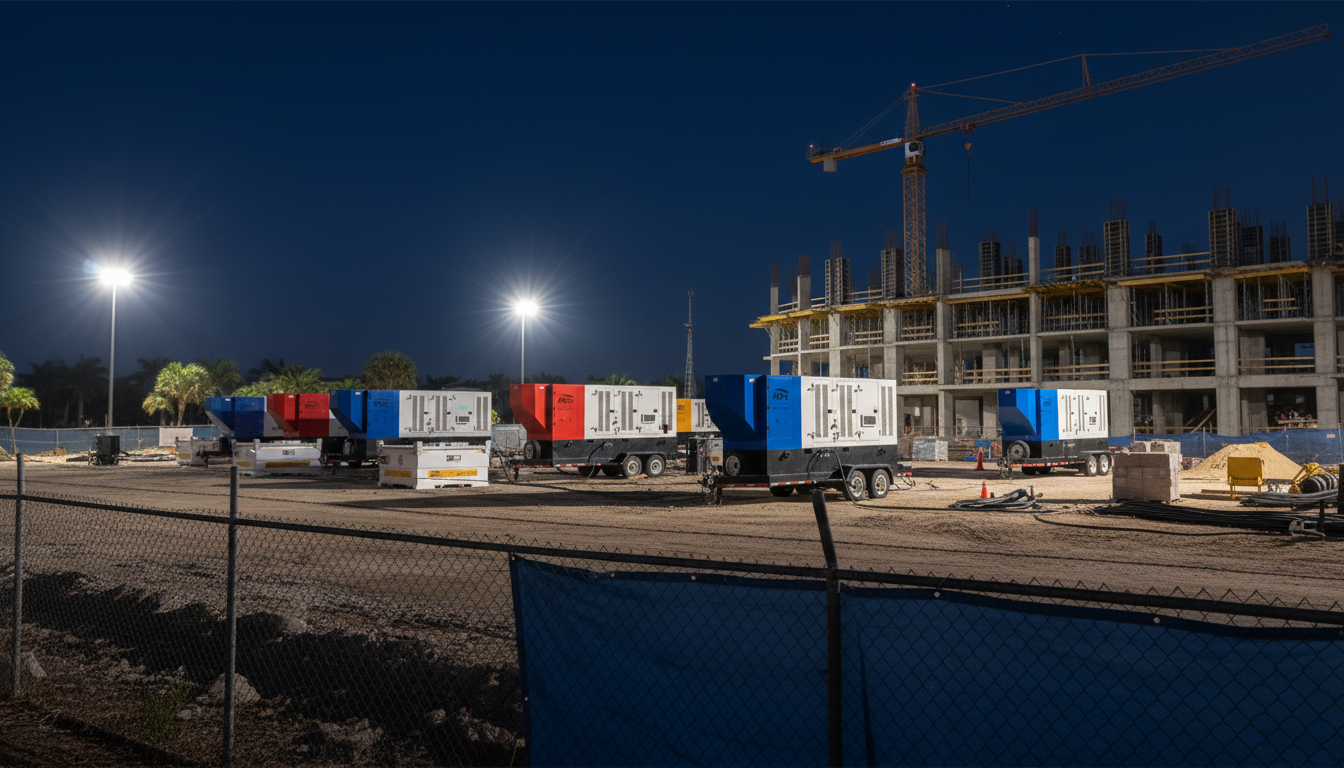
In regions where electricity is inconsistent or construction sites are located in remote or developing industrial zones, portable generators become the backbone of daily operations.Portable generators installed at a construction site to provide reliable power for equipment, lighting, and heavy machinery operations
The Role of Electricity in Industrial Construction Sites
Industrial Construction sites rely heavily on electricity to keep essential operations running. Without stable power, productivity drops, safety risks increase, and project timelines are threatened.
Construction Activities Dependent on Electricity
Most industrial construction tasks are power-intensive that may require a portable generator for construction site, such as:
- Operation of heavy machinery and lifting equipment
- Welding, cutting, and fabrication work
- Concrete batching and curing systems
- Site lighting and safety systems
- Temporary offices, monitoring equipment, and security
A single power failure can halt multiple workstreams simultaneously, leading to labor idle time and contractual penalties.
Why Grid Power Alone Is Not Enough
Even in urban industrial areas, grid power is often unreliable due to load shedding, maintenance shutdowns, or unexpected faults. Construction sites cannot afford to wait hours, or days, for power restoration. A dependable portable backup generator for construction site fills this gap and keeps projects moving forward.
Benefits of a Portable Generator for Construction Sites
A reliable generator on a construction site is not just about emergency backup; it is about operational control.
Ensuring Uninterrupted Workflow
Generators allow contractors to maintain continuous progress without being dependent on external utilities. This is especially critical for activities like concrete pouring, welding joints, or equipment calibration, where interruptions can compromise quality.
Improved Safety on Site
Power outages increase safety risks, particularly in industrial environments. Adequate lighting, functional safety systems, and powered emergency equipment are essential for worker protection. A generator on construction site ensures these systems remain active at all times.
Meeting Project Deadlines
Delays caused by power failures can cascade into missed milestones and financial penalties. Reliable power helps contractors stay aligned with project schedules and client expectations.
Choosing the Right Generator Capacity for Industrial Construction Sites
Not all portable generators are created equal. Industrial construction sites require careful planning when selecting generator size and specifications.
Assessing Load Requirements
Before selecting a generator for a construction site, contractors must evaluate:
- Total connected load of machinery and tools
- Starting surge requirements for heavy equipment
- Continuous vs intermittent power needs
- Future expansion during different construction phases
Undersized generators lead to overloads and equipment damage, while oversized units increase fuel and maintenance costs.
Fuel Type Considerations
Diesel generators are most commonly used in industrial construction due to their durability, fuel efficiency, and ability to handle heavy loads. Petrol and gas generators may be suitable for smaller or specialized applications but are rarely ideal for large-scale sites.
Selecting the right portable generator for construction site use ensures optimal performance, lower operating costs, and long-term reliability across all construction phases.
Generator Setup Integration with Civil and MEP Works
Power planning should be aligned with overall construction and engineering strategy.
Coordination with Civil Engineering Activities
Generator placement must consider site layout, ventilation, noise control, and fuel access. Poor placement can create safety hazards or disrupt construction flow. Early coordination with civil engineers helps integrate generator foundations, cable routing, and access points efficiently.
Supporting MEP Installations
MEP systems (electrical panels), HVAC equipment, pumps, and control systems often require stable power during installation and testing. A reliable generator setup in construction site ensures accurate commissioning and prevents equipment damage due to voltage fluctuations.
Rental vs Owned Generators for Construction Projects
Not every project requires permanent generator ownership. Many contractors opt for rental generators depending on project scope and duration.
When Generator Rental Makes Sense
Generator rental is ideal for:
- Short-term or phased construction projects
- Emergency power requirements
- Projects with fluctuating load demands
- Contractors seeking lower upfront costs
Rental solutions also provide flexibility to upgrade or downgrade capacity as site requirements change.
Advantages of Professional Generator Services
Working with experienced generator service providers ensures:
- Proper load assessment and generator selection
- Installation, testing, and commissioning
- Regular maintenance and on-site support
- Rapid response in case of breakdowns
This reduces operational risk and allows construction teams to focus on execution rather than power management.
Maintenance and Reliability: The Often Overlooked Factor
In industrial construction projects, the reliability of a portable generator is just as important as its capacity or fuel efficiency. Many project delays occur not because a generator is unavailable, but because it has not been properly maintained. Regular preventive maintenance ensures that generators perform consistently during critical construction activities such as welding, concrete pouring, equipment operation, and nighttime site lighting. Routine inspections, oil and filter changes, battery checks, and load testing help identify potential issues before they cause unexpected shutdowns. By prioritizing maintenance and working with experienced generator service providers, construction teams can ensure that their portable generators remain dependable throughout the project lifecycle, minimizing downtime and supporting continuous site productivity.
Importance of Preventive Maintenance
Regular maintenance includes:
- Oil and filter changes
- Fuel system inspection
- Battery testing
- Load testing under real conditions
Neglecting maintenance can result in generator failure at critical moments, disrupting operations and increasing repair costs.
On-Site Technical Support
Industrial sites benefit from having access to trained technicians who can respond quickly to faults or performance issues. This minimizes downtime and extends equipment lifespan.
Conclusion: Power Planning Is Project Planning
Reliable power is not an afterthought in industrial construction. It is a core requirement. From civil works and MEP installations to safety systems and site operations, every aspect of construction depends on stable electricity.
By investing in a well-planned generator setup, contractors gain control over timelines, safety, and productivity. Whether through rental or ownership, selecting the right generator solution ensures that construction sites remain operational, efficient, and resilient in any conditions.
In an industry where delays are expensive and reliability defines success, a dependable generator setup is not optional, it is essential.
FAQ
1. Why is a portable generator important for industrial construction sites?
A portable generator provides reliable temporary power for construction sites where grid electricity is unavailable or unstable. It ensures continuous operation of tools, lighting systems, safety equipment, and heavy machinery, preventing project delays and productivity loss.
2. What equipment on construction sites requires a portable generator?
Many construction activities rely on electricity, including welding machines, cutting tools, cranes, concrete mixers, lighting systems, water pumps, and temporary site offices. A portable generator ensures these systems operate efficiently without interruptions.
3. How do you choose the right portable generator for a construction site?
Choosing the right generator depends on factors such as total power load, starting surge requirements of equipment, duration of usage, and site conditions. Contractors typically calculate the combined wattage of all equipment to determine the appropriate generator capacity.
4. Why are diesel generators commonly used on construction sites?
Diesel generators are preferred for industrial construction because they are durable, fuel-efficient, and capable of handling heavy loads for long operating hours. They are also designed to perform reliably in demanding environments.
5. Can portable generators be used for night construction work?
Yes. Portable generators are widely used for night construction operations to power floodlights, machinery, and safety systems. This allows construction projects to continue around the clock and helps meet tight project deadlines.
