

How Pre-Fabrication Reduces Time and Cost in Building Projects

Table of Contents
The pace of change facing the construction industry demands that builders and developers emphasize speed, efficiency, and cost control. One such innovation has hit modern construction, namely pre-fabrication. This has helped companies in everything from residential buildings to major commercial projects to deliver faster, smarter, and more economically viable results without any compromise on quality.
In this blog, we showcase how Pre Fabrication can drastically reduce both time and cost in building projects, and for what reason it is being considered the best construction method taken up across the world.
What is pre-fabrication in construction?
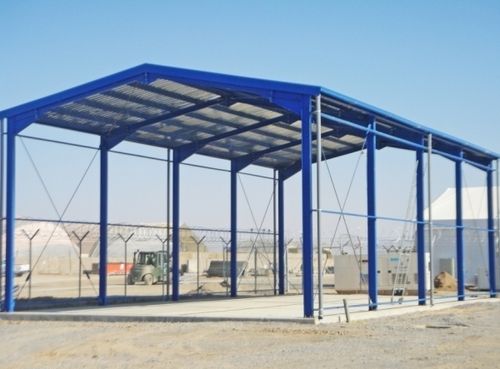
Pre-fabrication refers to a process of building components being manufactured in a controlled factory environment before being taken to the construction site for assembly. These include panels, walls, slabs, beams, columns, staircases, roofing systems, and even fully finished modular units.
Unlike traditional construction, most of the activities in Pre-Fabrication are shifted off-site, where most of the work can be done more efficiently and precisely.
Time Savings in Pre-Fabrication Compared to Building Projects
Processes for Parallel Construction
Pre-Fabrication Ideally, the greatest factor that saves time in Pre-Fabrication is the simultaneous performance of site preparation and fabrication of the components. While the foundation works are being carried out in the site, the structural components get fabricated in the factory.
Faster Installation and Assembly
The prefabricated parts are meant for fast assembly. This is because the prefabricated parts will be ready for assembly. Hence, the construction time will be greatly reduced. This will enable a project to be finished earlier by several months.
Minimal Weather Delays
The conventional construction process is largely impacted by climatic changes. Pre Fabrication ensures that almost all work takes place indoors, resulting in less postponement due to rainfall, sunlight, or any other climatic conditions.
Better Project Scheduling
Factory-controlled production allows for definite time scales. This allows the construction team to organize better, preventing unpleasant surprises.
How Pre-Fabrication Lowers Construction Costs
Lower Labor Costs
Because most of the processing is done at the factories through automated and semi-automated techniques, the labor needed is greatly diminished. This automatically lessens the labor costs.
Reducing Material Waste
Factory-based production incorporates accurate measurement, which reduces material wastage. As a result, this incurs lower costs on material. Additionally, there is improved sustainability.
Reduced Project Lifespan
Time is money. The faster the project can be completed, the lower the overhead expenses regarding management, equipment, security, and utilities.
Fewer Errors and Repitches
Controlled environments improve accuracy and the level of quality control. This is because there are fewer construction mistakes that translate to reduced rework, conserving time and money.
Quality and Consistency Strengths of Pre-Fabrication
Quality control is one of the most attractive advantages offered by Pre Fabrication. This is because the materials produced meet strict standards. In addition, the environment allows for better curing, finishing, and inspection than is the case when construction is done on-site.
This will lead to greater strength, better finish, and extended building life while maintaining expenses at affordable levels.
Sustainability and the Environment
The Pre Fabrication process encourages and supports a sustainable construction method. The lack of site-generated materials, efficient resource usage, and minimal site disruption characterized by noise, dust, and carbon dioxide emissions are distinct features of a sustainable process.
For developers targeting green building certification, the advantage here goes to Pre-Fabrication.
Increased Safety at Construction Sites
The less work done at the construction site, the safer it is. The fewer number of workers, the short time taken, and the reduced usage of heavy machinery reduce the chances of accidents and injuries occurring. It leads to lower insurance and regulatory expenses as well.
Applications of Pre-Fabrication in Modern Construction
- Residential housing projects
- Commercial buildings and offices
- Structures and Storage Facilities at Industrial Enterprises
- Institutions offering education and health services | Institutions
- Infrastructure and utility buildings
The Pre-Fabrication methods can be applied for various construction requirements thanks to its versatility.
Pre-Fabrication: The Future of Construction
With the growing need for construction, the trend of fast delivery is on the rise. However, this is where the concept of Pre-Fabrication comes into the picture, as it fits well into the expectations of today’s requirements like cost-effectiveness, sustainability, quality, or fast
With the technological improvements and evolving designs, prefabricated construction is constantly improving and is thus a shrewd long-term investment strategy for developers.
Conclusion
At Deepika, Pre Fabrication is revolutionizing the method of construction and the manner in which buildings are produced. The time, cost, and risks associated with the construction process have been diminished to a great extent. The benefits resulting from faster assembly, the control of quality, reduced waste, and safe working practices have ensured that the application of pre-fabrication techniques provides enormous advantages for every form of building project.
FAQs
- What is pre-fabrication in construction?
Pre-Fabrication involves manufacturing building components in a factory and assembling them on-site, reducing construction time and cost. - How does pre-fabrication reduce project timelines?
Parallel manufacturing and site preparation, faster installation, and minimal weather delays help complete projects faster. - Is pre-fabrication more cost-effective than traditional construction?
Yes. Lower labor costs, reduced waste, fewer errors, and shorter project durations make pre-fabrication highly cost-efficient. - Does pre-fabrication affect building quality?
No. In fact, factory-controlled production often results in higher quality, better consistency, and improved durability. - Is pre-fabrication suitable for all types of buildings?
Pre-Fabrication is suitable for residential, commercial, industrial, and institutional projects, making it highly versatile.

